|
|
|
|
|
|
Please try again shortly. Or, for immediate Assistance: USA RAIL RESERVATION AND TRAVEL PLANNING 1-800-872-7245. PRIVATE RAILCAR SERVICES DIRECTORY Thank you for your patience. |
|
|
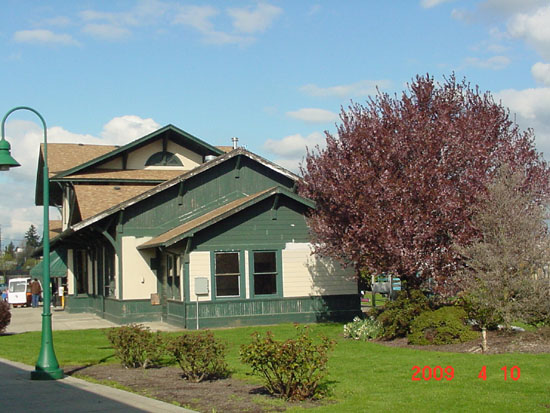
CITY OF VANCOUVER"Land of The Mud Turtles"Clark County Tourism Chamber of Commerce Clark County Chamber of CommerceConvention & Visitors Bureau Banquet HallsAmtrak Time Tables Cascades Schedule Amtrak Station Information Amtrak Atlas North American Atlas US Rail & Road Map Directions |
|||||
 |
|||||
| CascadesTrain #: 500,501,506,507,508,509,513,516
Coast StarlightTrain #: 7,8
|
Amtrak Northbound 14/Dp-4:36p 500/Dp-8:45a 506/Dp-12:30p 516/Dp-3:05p 508/Dp-6:30p Southbound 11/Dp-1:08p 501/Dp-10:29a 513/Dp-2:19p 507/Dp-5:19p 509/Dp-8:29p Train #: Eastbound 28/Dp-5:07p Spokane Connection 8/Dp-1:15aSpokane Connection 7/Dp-2:45a Westbound 27/Dp-9:18a |
||||
|
GENERAL INFORMATION: Weather Local News Library Native American tribes Chinook/Chinookan and Klickitat inhabited the Vancouver Area with permanent settlements of timber longhouses. In 1775 the first European explorers,introducted small pox, approximately half of the Native Americans dead, before the Lewis and Clark expedition camped in the area in 1806. During the next fifty years, measles, malaria and influenza had reduced the Chinookan population from 80,000 to a few dozen refugees, landless, slaveless and swindled out of a treaty. The first permanent European settlement was established 1824, as fur trading post of the Hudson's Bay Company, Fort Vancouver. Meriwether Lewis wrote that the Vancouver area was "the only desired situation for settlement west of the Rocky Mountains." The settlements were under US and Britain authority as a "joint occupation agreement", which led to the Oregon boundary dispute amd ended on June 15, 1846, with the signing of the Oregon Treaty, which gave the United States full control of the area. Henry Williamson in 1845, laid claim west of the Hudson's Bay Company, called Vancouver City and registered claim at the U.S. courthouse in Oregon City. The City of Vancouver was incorporated on January 23, 1857. In 1859-1860 legislature was seated in Vancouver briefly the capital of the Washington Territory, before being returned to Olympia, Washington, in accordance with Isaac Stevens' concern that proximity to Oregon might give its southern neighbor undue influence. U.S. Army Captain Ulysses S. Grant was quartermaster at what was then known as Columbia Barracks in September 1852. Other notable generals to have served in Vancouver include George B. McClellan, Philip Sheridan, Oliver O. Howard and 1953 Nobel Peace Prize recipient George Marshall. ATTRACTIONS:
Clark County Museum
Pearson Air Museum
Fort Vancover
EVENTS:
Wine & Jazz Festival
Bravo Concerts
LMG Concerts
Sausage Festival
County Fair
Amphitheater
| |||||
|
RAILWAY BUSINESS CAR SERVICES
All Inquires submitted To: rbcs@usa.com
![[Email Us]](http://www.atdlines.com/images/mailbutn.gif)
![[Return to Top]](http://www.atdlines.com/images/up.gif) |
![Power By ETS]](http://www.atdlines.com/motion/train6.gif)
© Copyright 1981-
ATD LINES All Rights Reserved
Not affilated nor owned by NRPC-Amtrak
|
![Power By ETS]](http://www.atdlines.com/images/power.gif)